
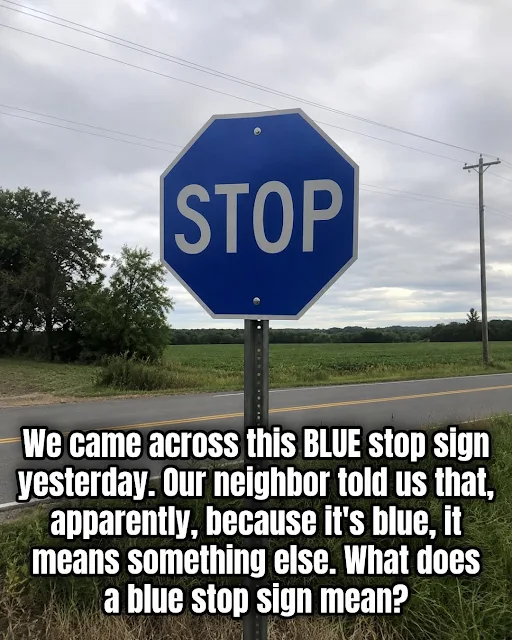
As a Historical Artifact
In some rare cases, a blue stop sign might be a historical artifact. Before the standard red octagon was universally adopted in the 1950s, there were experimental and regional variations in sign design. A blue stop sign could be an older sign that was never replaced, serving as a quiet reminder of a time before traffic control was fully standardized.
As a General Warning or Safety Measure
Some private communities may use blue stop signs simply to make intersections more visible and to encourage drivers to slow down. They serve as a visual cue to be cautious and aware of your surroundings.
What to Do If You See a Blue Stop Sign
The safest and most practical approach is simple: treat it as you would any other stop sign.
Come to a complete stop, check for pedestrians, cyclists, and cross-traffic, and proceed when it is safe. Whether the sign is red, blue, or any other color, the intention is to improve safety and regulate the flow of traffic.
A Gentle Reminder
The world of traffic signs is a fascinating mix of federal law, local ordinances, and private property regulations. The next time you encounter a blue stop sign, you can take a moment to appreciate its quiet curiosity. It's a reminder that not everything in our environment is a strict rule of law; some of it is just a gentle request for safety and consideration.
