
Your choice depends largely on what you're cooking.
Choose Green Onions or Scallions When:
You need both a white and green portion.
You want mild onion flavor.
You're making stir-fries or fried rice.
You want a versatile garnish.
You're adding onion to dips or sauces.
Choose Spring Onions When:
You want a stronger onion flavor.
The bulb will be cooked as part of the dish.
You're grilling or roasting the onions.
You want a more substantial onion texture.
Choose Chives When:
You want a delicate onion flavor.
You're finishing a dish.
You're making a creamy dip or sauce.
You're topping potatoes or eggs.
You want an attractive green garnish.
Can You Eat the Whole Green Onion?
Yes. Both the white and green portions of green onions are edible.
The white part generally has a stronger flavor, while the green leaves are more delicate. You can use them separately or chop the entire onion and add it to your recipe.
Remove the roots and any wilted or damaged sections before preparing them.
How to Store Green Onions and Chives
Fresh alliums are best when they're kept cool and protected from excess moisture.
For green onions, trim away any damaged portions and store the bunch in the refrigerator. Keeping them in a loosely closed bag or suitable container can help prevent them from drying out.
Chives are more delicate and can wilt relatively quickly. Refrigerate them and use them while they're fresh for the best flavor.
If your green onions become slightly limp but aren't spoiled, placing the cut ends in cool water for a short time can sometimes help restore some crispness.
A Simple Way to Remember the Difference
Think of the four ingredients this way:
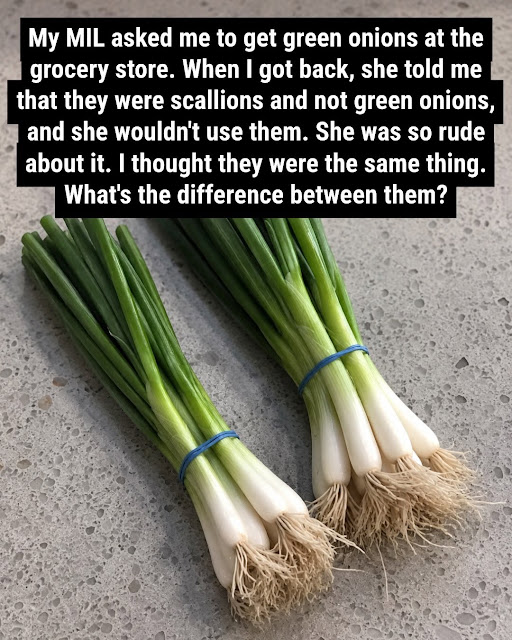
Green onions: young onions with edible green leaves and a small white base.
Scallions: usually another name for green onions, depending on the region.
Spring onions: generally more mature onions with a more developed bulb and stronger flavor.
Chives: a completely different, much thinner allium used mainly as a delicate herb or garnish.
Frequently Asked Questions
Are scallions and green onions the same?
In most American recipes, yes. The two names are commonly used interchangeably. Regional naming differences can make the terminology less consistent.
Are spring onions the same as green onions?
Not always. Spring onions are generally more mature and have a more developed bulb. However, the names can be used differently in different regions, so appearance is often a better guide than the label.
Are chives baby green onions?
No. Chives are a different plant. They have thin, hollow stems and a much more delicate onion flavor.
Can I use green onions instead of chives?
Yes, particularly as a garnish, but expect a stronger onion flavor and a slightly different texture.
Can you eat the green tops of spring onions?
Yes. The green leaves are edible and can be used much like the green portion of a scallion.
Which has the strongest flavor?
Generally, mature spring onions have a stronger onion flavor than green onions or chives. However, flavor intensity can vary depending on the variety, growing conditions, and how the ingredient is prepared.
The Bottom Line
Although green onions, scallions, spring onions, and chives can look similar at first glance, they aren't all the same ingredient.
Green onions and scallions are usually interchangeable names for young onions. Spring onions are generally more mature and have a larger bulb and stronger flavor. Chives are a separate plant with delicate, grass-like stems and a much milder onion taste.
Once you know what you're looking at, choosing between them becomes much easier. And when a recipe calls for one but your refrigerator contains another, understanding their differences will help you make a substitution that actually works.
