
To be happy in old age, we must learn to stop fighting the clock and start walking with it. This involves a shift from doing to being. In our youth, time is a resource to be spent on building. In our older years, time is a space to be inhabited. Confucius emphasized the beauty of the daily ritual. Whether it is the way we drink our tea, the way we greet the sunrise, or the way we listen to a friend, these small moments are where life actually happens.
If we train ourselves now to find satisfaction in the here and now, we won’t find ourselves lost when the fast-paced distractions of the working world fall away. Contentment in old age comes from the realization that this moment, right now, is the only one where virtue can be practiced and joy can be felt. By letting go of the ghosts of our younger years and the monsters of our future, we free ourselves to experience the richness of our senior years. We learn to see time not as a countdown to an end, but as a continuous unfolding of the Way.
3. Human Relationships: Our True Wealth
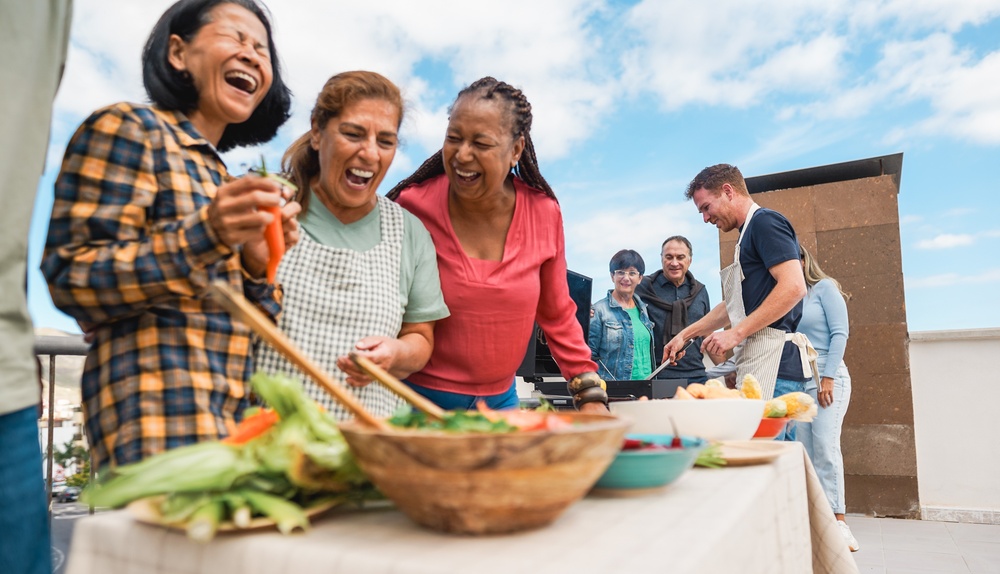
In the West, we often talk about saving for retirement, and we almost always mean money. For Confucius, the ultimate retirement fund is your Relational Wealth. Confucianism is a deeply social philosophy; it states that we do not exist in a vacuum. We are defined by our roles: as children, parents, siblings, friends, and citizens.
Xiao(filial piety) is perhaps the most famous Confucian concept, emphasizing the respect and care children owe their parents. However, this is a two-way street. To be a person who is loved and cared for in old age, one must be a person who has invested deeply in others throughout their life. Confucius believed that the highest joy is “having friends come from afar.”
Modern isolation is one of the greatest risks to the elderly. We often spend our middle years prioritizing networking over friendship and career over family. Confucius warns us that this is a poor trade. True wealth in your golden years is the number of hands willing to hold yours and the number of hearts that carry your stories. To live happily in old age, we must prioritize the Five Relationships and cultivate them with sincerity and Ren (benevolence).
This means being present for our children not just as providers, but as mentors and companions. It means maintaining deep, non-transactional friendships. It means being an active member of a community. In old age, the walls of our homes can feel very small if they aren’t filled with the echoes of shared experiences. By shifting our focus from accumulating things to nurturing souls, we ensure that our later years are filled with the warmth of humanity rather than the coldness of things. Confucius reminds us that a man of virtue is never lonely; his character acts as a magnet for others.
4. Life’s Meaning: Leaving More Than Memories

Image credit: Shutterstock
The final principle for a contented old age is the pursuit of a meaning that transcends the self. Confucius was not concerned with personal fame, but with the “transmission of the Way.” He famously said, “I transmit but do not create.’ He saw himself as a link in a chain, passing on the wisdom of the ancients to the next generation.
Many people face a“crisis of meaning” in old age because they feel their work is done and they have nothing left to contribute. Confucius would argue that your most important work is just beginning. In your golden years, you transition from the role of the worker to the role of the Elder or Sage. Your meaning is found in mentorship, in storytelling, and in providing a moral example for those who follow.
To be happy in old age, you need to feel that your life has a surplus that you can give away. This isn’t necessarily about money; it’s about wisdom, values, and love. What are you leaving in the hearts of others? If your life’s goal was merely to consume, you would find your old age empty. But if your goal was to cultivate virtue, you will find that you have an endless supply of legacy to share.
Confucius taught that the noble person seeks to bring out the best in others. In old age, this becomes your primary mission. Whether it is teaching a grandchild a skill, volunteering in your community, or simply being a beacon of peace in a chaotic world, having a sense of purpose that extends beyond your own lifespan is the ultimate antidote to despair. You aren’t just waiting for the end; you are completing the circle of life by planting seeds in the gardens you will never sit in. This is the essence of leaving more than memories; it is leaving a “Way” for others to follow.
⬇️For more information, please continue to the next page⬇️
